
We vote every two years. But policy decisions happen in between.
Most people have no clear way to make their views count when bills are being debated and votes are being cast. Posting, arguing, calling, emailing, signing, and protesting can create activity — but they rarely produce something organized, measurable, and easy to compare to the votes that actually matter.
Watchin is built to change that. It gives people a simple way to follow legislation, make their position known, and clearly see whether their representatives vote with their constituents — or not.
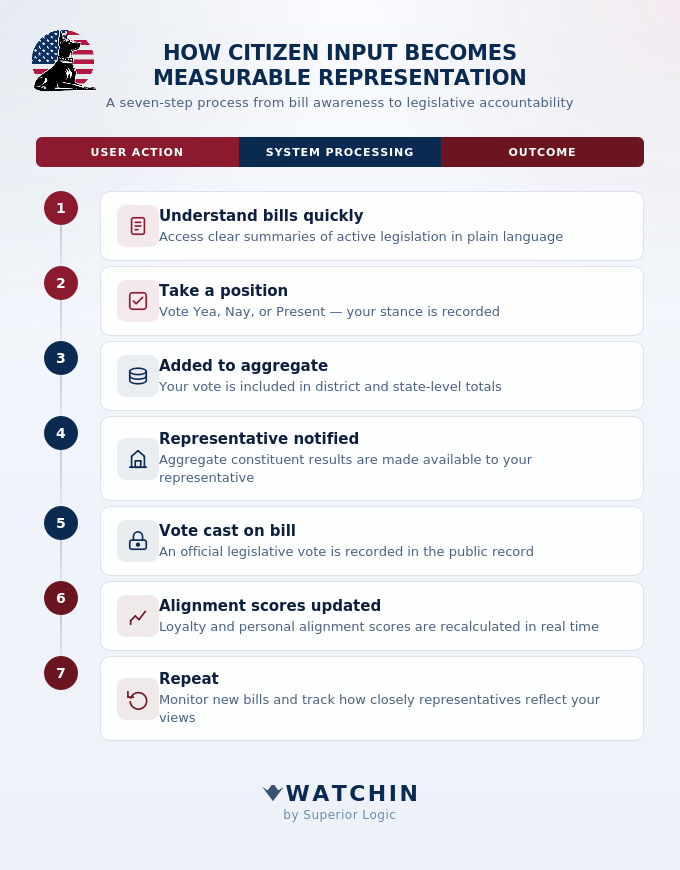
Too much political activity still leaves people feeling unheard.
Millions of people care. They follow the news. They post. They argue. They sign petitions. They call offices. They show up in the streets. But when it comes to actual policy decisions, most people still feel the same thing: we do not have a real voice in what happens next.
Watchin turns scattered opinions into something easier to understand and harder to ignore.
Instead of leaving public opinion spread across social feeds, inboxes, comment sections, and angry moments, Watchin creates a simpler path: follow the bill, make your position known, and compare that to the vote that follows.
You are trying to be heard. The system around you is not built for clarity.
Watchin is not built on the idea that people do not care. It is built on the reality that the ways people speak up now are fragmented, emotional, hard to verify, or too small to make a clear difference.
Social media
Fast, emotional, and loud — but not organized in a way that clearly shows where constituents stand on a specific bill.
Protests
Powerful in the moment, but difficult to measure, difficult to compare, and often more likely to deepen conflict than produce clarity.
Petitions
Time-consuming, difficult to verify, and often disconnected from the actual vote that follows.
Calls and emails
Important, but usually one voice at a time. Most people assume their effort disappears into a much bigger pile.
Election day alone
Voting matters. But most policy decisions happen between elections, long before people get another real chance to respond.
What is missing
A simpler way for people to express where they stand on actual legislation — and then see how that compares to the votes their representatives cast.
A clearer path from public opinion to public votes.
The goal is not to make politics louder. The goal is to make it easier to understand where people stand, easier to participate, and easier to see what elected officials do next.
Learn the bill
Get a fast, plain-language understanding of what is being proposed.
Share your position
Say where you stand without writing a long post or fighting through a thread.
See where others stand
View a clearer picture of how constituents are leaning on that bill.
Compare it to the vote
Representatives have access to aggregated constituent input before roll call votes. Whether they follow it or ignore it becomes visible after the roll call vote.
This is easier to understand when you can see it.
These are real examples from the current demo showing how bills are presented, how positions are captured, and how alignment is calculated. The demo was built to show and test functionality and does not reflect the final user experience.
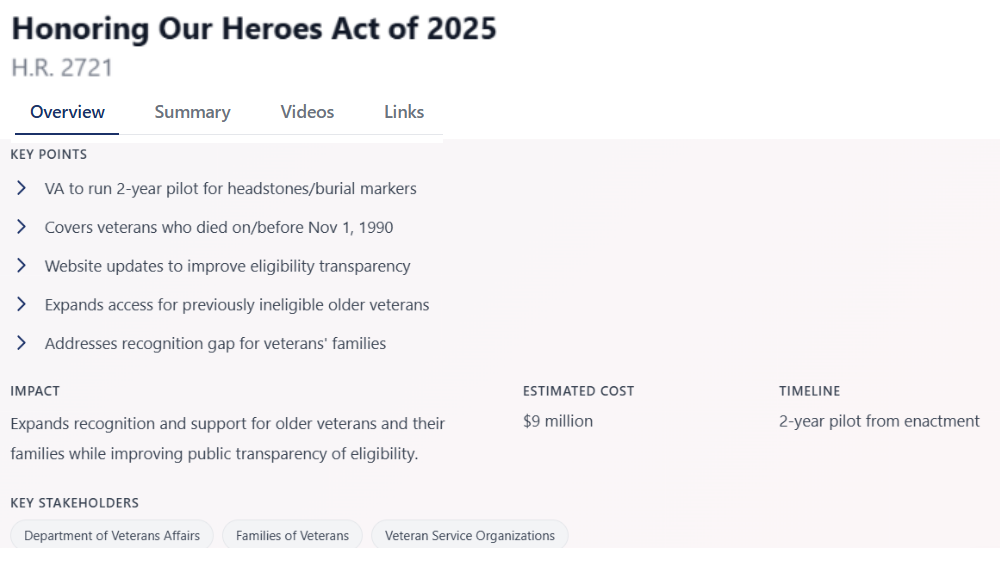 Plain-language bill overview
Review a bill in a format that is faster to understand than legal text alone.
Plain-language bill overview
Review a bill in a format that is faster to understand than legal text alone.
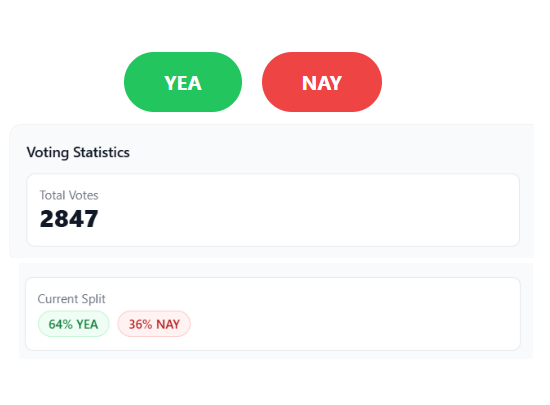 Take your position
Respond directly and make your view part of a clearer record of constituent input.
Take your position
Respond directly and make your view part of a clearer record of constituent input.
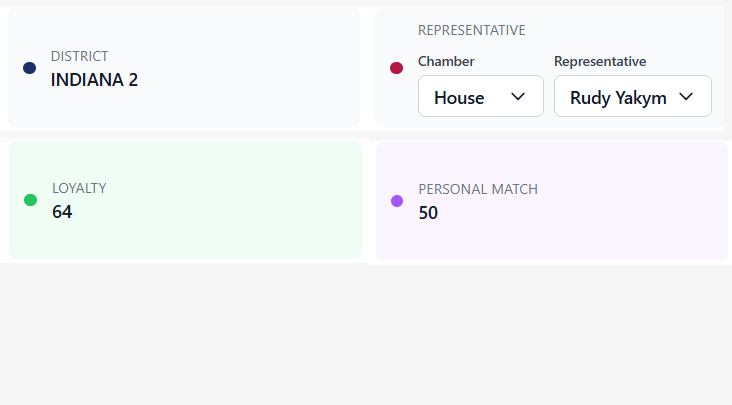 Check alignment with your representatives
Compare constituent positions to representative behavior in a way that is easier to follow.
Check alignment with your representatives
Compare constituent positions to representative behavior in a way that is easier to follow.
A better system has to be easy to use — and strong enough to matter.
Watchin is meant to be simple for users, but serious about trust. That matters because a public voice system only works if people believe the people behind it are real.
We should not have to guess where our representatives stand.
We should be able to follow the issue, make our position known, and see clearly whether the people elected to represent us are voting with their constituents — or not. That should not be complicated. It should be obvious.
Participate in the pilot. Join the waitlist. Be early.
Watchin is being built for people who want something better than outrage, confusion, and political noise. If that sounds like you, take a minute to participate in the pilot and join the waitlist to follow what comes next.